
"medium growth"
5000 article(s) found

Coffee beans Coffee varieties Yunnan Arabica coffee
Yunnan is China's main coffee producing area. Yunnan is located in the subtropical mountain climate zone south of the Tropic of Cancer, with unique plateau red soil, fertile loose soil, mild climate, especially suitable for planting small coffee species. Yunnan coffee was first introduced by French missionaries in 1902. Up to now, 24 coffee trees with more than 90 years old still grow in Zhukula Township, Binchuan County. 1914 Ruili Jing

Characteristics of Tanzania Fine Coffee-A brief introduction to Tanzania Fine Coffee
All varieties of Tanzanian coffee beans perform well in terms of flavor and sales. The new breed of coffee gets high marks in all categories. The one with the lowest score was 7. 5%. Many branches-for new planting, 1. High yield and 6. 5%. It grows fast. The draw of the local variety got a medium score in each evaluation, which proved that both the new variety and the old variety were in these aspects.

Cultivation techniques of Coffee Tree Seedling Propagation and Establishment of Coffee Garden
(1) Seedling propagation Coffee seedling propagation can be divided into seed propagation and asexual reproduction. 1. Seed propagation (1) seed collection, seed washing and seed storage during the full ripening period of coffee (the full ripening period of medium-grain coffee in Hainan Island is from February to March, and that of small seed is from September to November). The fully ripe fruits are picked from strong and high-yielding mother trees to make seeds. After the fruit is harvested, peel and wash the seeds immediately. The method is to remove the fruit.

Planting conditions and environmental methods of coffee trees require the growth process of fruit coffee cherries
Coffee is a perennial evergreen shrub or small tree of Rubiaceae. It is a horticultural perennial cash crop with the characteristics of fast growth, high yield, high value and wide market. Wild coffee trees can grow to a height of 5 to 10 meters, but coffee trees planted on the manor are often cut to a height of less than 2 meters in order to increase the amount of fruit and facilitate harvesting. The opposite leaves of coffee trees are long oval.

Variety types in the growth process of coffee trees
Native to Brazil, it is another hybrid tree species; somewhere between CATURRA and MUDO NOVO. The tree is usually low in shape, but slightly taller than CATURRA and easy to harvest, and the coffee fruit begins to bear fruit in late summer. It has more sour taste, and good sour taste makes you secrete salivary acid like lemon and orange, which is usually produced at high altitude and high density.
Environmental Requirements of Coffea arabica Cultivation in Yunnan Province
According to Yunnan's natural conditions, coffee planting areas should be selected in areas where the annual average temperature is greater than 18 degrees, the coldest monthly average temperature is greater than 11.5 degrees, the monthly average temperature is less than 13 degrees within two months, and the extreme minimum temperature is generally above zero. Arabica coffee is native to the Ethiopian tropical rain forest in northern Africa. The temperature is relatively low, with an average annual temperature of 20 degrees. Robusta coffee
The establishment of a coffee garden
1. The environmental conditions of land selection, planning and reclamation are closely related to the growth and development of coffee, which should be determined according to the growth habits and environmental requirements of coffee. Try to avoid choosing lowlands where cold air is easy to accumulate and condense frost; coffee roots are good, so choose well-drained and loose soil; coffee needs a calm wind environment, so in areas where there is no primary forest, consideration should be given to planning windbreaks.

Costa Rican Volcano Coffee effect of High altitude Volcanoes on the growth and Flavor of Coffee beans in Tarasu
Costa Rican Tarasu coffee grows in high-altitude volcanic soil, where cherries ripen more slowly, giving it a rich and rich flavor. Single-origin Tarrazu Estate coffee, known as one of the best coffee in the world, is roasted to medium color to retain its natural fullness, elegance and rich flavor. Certification: kosher certified Rain Forest Union

Coffee roasting
The growth environment of boutique coffee beans also has higher requirements. Generally grow at an altitude of 1500 meters or even more than 2000 meters above sea level, with appropriate precipitation, sunshine, temperature and soil conditions. Some world-famous coffee beans also have a special geographical environment, such as the alpine clouds in the Blue Mountains, the free shade provided by the afternoon clouds in Kona, and the volcanic ash soil in Antigua.

Nestle's revenue in the first quarter reached 150 billion, and the coffee business performed well.
On April 22nd, global food giant Nestl é released its first-quarter results for 2021. Nestle's total sales in the first quarter were 21.1 billion Swiss francs (151.559 billion yuan), up 1.3 percent from a year earlier and the biggest quarterly increase in a decade, according to the financial report. this is thanks to increased consumer demand for coffee, dairy products and pet care products during the COVID-19 epidemic.

The type of tea noodles: large noodle, medium noodle, small open face Phoenix single fir oolong taste, which is more fragrant, more resistant and delicious?
Everyone thinks that only new tea tastes good, and only the more tender the leaves are, the better the quality is. In fact, this is not the case. As we all know, all plants need to be mature enough to store enough nutrients to reach the peak of taste and aroma. It's like a tomato.

Growth of coffee beans in Tanzania and characteristics of coffee beans in Tanzania
The coffee producing areas around Meru, commonly known as "Clemangaro", are occasionally used as distribution centers such as Moshi or Aru.

A brief introduction to the flavor, taste and aroma characteristics of Hawaiian Kona Coffee
Kona Coffee is fresh, crisp, medium-bodied, slightly sour and full-bodied, with a long finish. Most rarely, Kona Coffee has a blend of wine, fruit and spice, as fascinating as the colorful colors of this volcanic archipelago. Generally speaking, the taste of Kona coffee is relatively mild.
What is the growing environment of coffee beans? What conditions must be met to grow coffee beans?
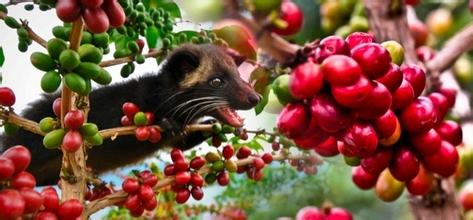
Coffee is native to tropical Africa. The origin of the small seed species is the tropical plateau of Ethiopia. It is between 900 and 1800 meters above sea level with an average annual temperature of 19. C; the mid-grain species is native to the tropical rain forest of the Congo, with an average annual temperature of 2126 at an altitude of less than 900 meters. C . Their origins are shaded or semi-shaded forests and river valleys, so the formation of coffee requires calm wind, cool and wet.
Coffee beans Coffee
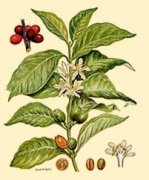
There are about 60 species of coffee in the world, of which only 25 species are cultivated to make coffee, of which only 4 species are used as commercial coffee: large fruit coffee (Coffea liberica), medium fruit coffee (Coffea canephora), small fruit coffee (Coffea arabica) and high yield coffee (Coffea dewevrei). These are botanical names. Coffee in the world at present

Katim coffee bean, Katim coffee bean characteristics
Follow the caf é (official Wechat account vdailycom) found that the beautiful cafe opened its own small shop, small seed coffee, which belongs to the high generation variety of Katim, with medium dwarf plant, exuberant growth, stable by-characters, emerald green leaves of crown buds, dark green leaves of the whole plant, columnar shape, short internodes, many branches, exuberant growth, wide adaptability, strong drought resistance and certain cold resistance.

Flavor characteristics of Honduran Coffee growth Geography and Development Direction of Coffee beans
You may have heard of the Honduran Blue Hole and the famous Mayan civilization, but you may feel strange about the fragrance of Honduran coffee. Today, let's get to know the Honduran coffee bar and talk about the coffee in Central America. You may immediately think of these coffee producing countries such as Guatemala, Costa Rica and Panama. But in Central America, El Salvador,
A family of coffee beans
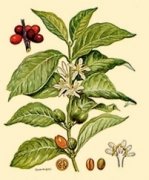
There are about 60 species of coffee in the world, of which only 25 species are cultivated to make coffee, of which only 4 species are used as commercial coffee: large fruit coffee (Coffea liberica), medium fruit coffee (Coffea canephora), small fruit coffee (Coffea arabica) and high yield coffee (Coffea dewevrei). These are botanical names. Coffee in the world at present
A family of coffee beans
There are about 60 species of coffee in the world, of which only 25 species are cultivated to make coffee, of which only 4 species are used as commercial coffee: large fruit coffee (Coffea liberica), medium fruit coffee (Coffea canephora), small fruit coffee (Coffea arabica) and high yield coffee (Coffea dewevrei). These are botanical names. Coffee in the world at present

Boutique Coffee Analysis of Coffee beans
There are about 60 species of coffee in the world, of which only 25 species are cultivated to make coffee, of which only 4 species are used as commercial coffee: large fruit coffee (Coffea liberica), medium fruit coffee (Coffea canephora), small fruit coffee (Coffea arabica) and high yield coffee (Coffea dewevrei). These are botanical names. Coffee in the world at present